
How DEXA Scans for Ageing Help Us Understand Our Health Better
Updated: Apr 9
As we grow older, our bodies change in many ways. Some changes are visible, like wrinkles or grey hair, but others happen inside us, affecting our bones, muscles, and fat. Understanding these internal changes is key to maintaining good health and staying active. One tool that helps us do this is the DEXA scan. In this post, we will explore how DEXA scans for ageing provide valuable insights into our body composition and help us make informed decisions about our health.
Why DEXA Scans for Ageing Are Important
DEXA stands for Dual-Energy X-ray Absorptiometry. It is a simple, quick, and non-invasive scan that measures bone density, muscle mass, and fat distribution. For ageing individuals, these measurements are crucial because they reveal changes that can affect mobility, strength, and overall wellbeing.
Here's why DEXA scans matter as we age:
Bone Health: Bones tend to lose density with age, increasing the risk of fractures and osteoporosis. DEXA scans detect bone loss early, allowing us to take action before serious problems develop.
Muscle Mass: Sarcopenia, or muscle loss, is common in older adults. DEXA scans quantify muscle mass, helping us track muscle health and adjust exercise or nutrition plans accordingly.
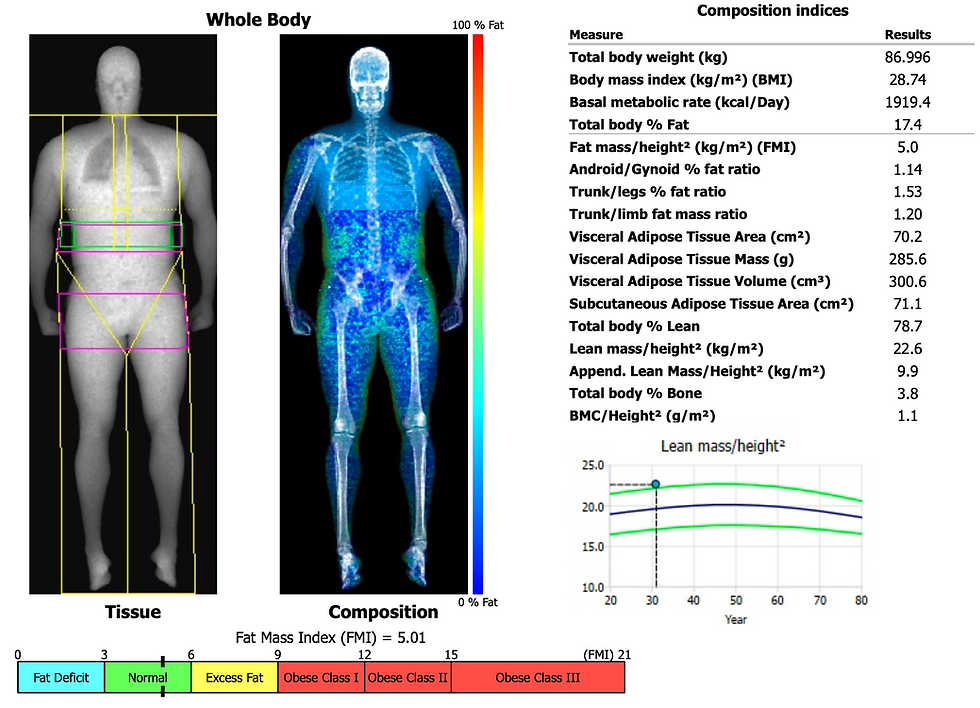
Fat Distribution: Fat tends to accumulate differently as we age, often increasing around the abdomen. This can raise the risk of metabolic diseases. DEXA scans provide a detailed map of fat distribution, guiding lifestyle changes.
By understanding these factors, we can tailor our health strategies to maintain strength, balance, and vitality.

How DEXA Scans for Ageing Provide Detailed Body Composition Metrics
Unlike traditional scales or BMI calculations, DEXA scans give us a clear picture of what our body is made of. This precision is especially useful for ageing adults who want to monitor subtle changes that affect health.
Track how your body changes with age — DEXA gives you the data to act early. Book at Precision Body Lab → https://www.precisionbodylab.com.au/book-online
The scan divides the body into three main components:
Bone Mineral Content (BMC): Measures the strength and density of bones.
Lean Mass: Includes muscles, organs, and water content.
Fat Mass: Shows total body fat and its distribution.
This detailed breakdown helps us:
Identify early signs of osteoporosis or osteopenia.
Detect muscle loss that might not be obvious on the outside.
Understand fat patterns that could increase health risks.
For example, if a scan shows decreased lean mass in the legs, we might focus on strength training exercises to improve mobility and reduce fall risk. If bone density is low, calcium and vitamin D intake can be adjusted, or medical treatment considered.
Using an ageing dexa scan regularly allows us to track these changes over time and respond proactively.
What should you never do before getting a DEXA bone scan?
To ensure accurate results from a DEXA scan, there are some important things to avoid before your appointment:
Do not take calcium supplements for at least 24 hours before the scan. Calcium can interfere with the X-ray absorption and affect bone density readings.
Avoid wearing clothing with metal fasteners or zippers. Metal can distort the scan images.
Do not undergo any other imaging tests involving contrast dyes within a week before the scan. These can affect the accuracy of the results.
Avoid heavy exercise on the day of the scan. Intense activity can temporarily change muscle hydration and affect lean mass measurements.
Inform the technician if you are pregnant or suspect pregnancy. Although the radiation dose is low, precautions are necessary.
Following these guidelines helps us get the most reliable data from our DEXA scan, which is essential for making informed health decisions.
Practical Ways to Use DEXA Scan Results for Ageing Health
Once we have our DEXA scan results, the next step is to use this information effectively. Here are some practical ways to apply the data:
Create a personalised exercise plan: If muscle mass is low, focus on resistance training and balance exercises to build strength and prevent falls.
Adjust nutrition: Low bone density may require increased calcium and vitamin D intake. High fat mass around the abdomen suggests a need for dietary changes to reduce cardiovascular risk.
Monitor progress: Repeat scans every 12-18 weeks to see how your body composition changes with lifestyle adjustments.
Discuss medication options: For significant bone loss, consult a healthcare provider about treatments that can improve bone strength.
Set realistic goals: Use the scan data to set achievable health and fitness targets based on your current body composition.
By integrating DEXA scan insights into our daily routines, we can maintain better health and independence as we age.
How Regular DEXA Scans Support Long-Term Health and Fitness
Regular DEXA scans become a powerful tool for tracking ageing health over time. They provide objective data that helps us:
Detect early changes before symptoms appear.
Measure the effectiveness of diet, exercise, or medical treatments.
Stay motivated by seeing tangible progress.
Prevent injuries by identifying weaknesses or imbalances.
Make informed decisions about lifestyle and healthcare.
For those committed to longevity and quality of life, DEXA scans offer a clear window into the body's internal changes. This knowledge empowers us to take control and adapt our strategies as needed.
We encourage scheduling scans at trusted facilities that specialise in accurate body composition analysis. This ensures the data is reliable and useful for guiding your health journey.
By understanding how DEXA scans for ageing work and using their detailed insights, we can better support our bodies through the natural changes of ageing. This approach helps us stay strong, healthy, and active for years to come.
Want to see how your body is changing with age?
Book a DEXA scan at Precision Body Lab in Miranda, Sydney. Get a complete picture of your muscle mass, bone density, and fat distribution - so you can take action before small changes become big problems. Trusted by 1,000+ clients, rated 5 stars on Google.
Book your scan → https://www.precisionbodylab.com.au/book-online


Comments