
Decoding Your DEXA Scan Results: Understanding DEXA Scan Readings
Updated: Apr 9
When we get a DEXA scan, it can feel like we're handed a complex puzzle of numbers and terms. These results hold valuable insights about our body composition, bone health, and overall fitness. Understanding these details helps us make informed decisions about our health and training. Let’s break down what your DEXA scan results mean and how you can use this information to improve your wellbeing.
Understanding DEXA Scan Readings
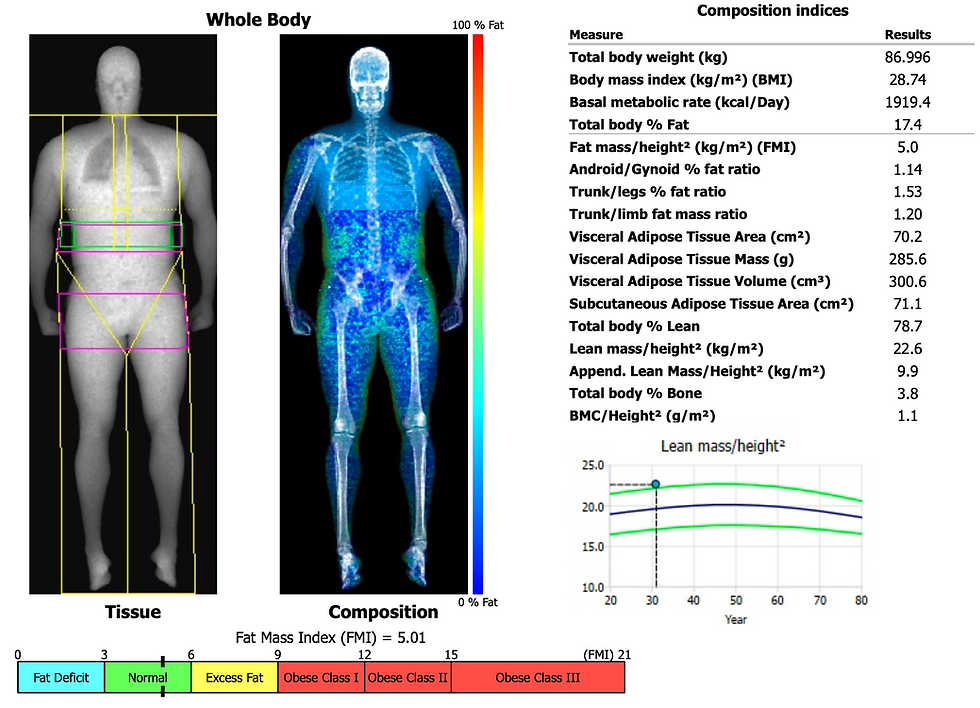
A DEXA (Dual-Energy X-ray Absorptiometry) scan measures three main components of your body: bone mineral density, lean muscle mass, and fat mass. This scan provides a detailed snapshot of your body composition, which is more informative than just weight or BMI.
Here’s what the key metrics mean:
Bone Mineral Density (BMD): This tells us how strong your bones are. It’s important for assessing osteoporosis risk.
Lean Mass: This includes muscles, organs, and other non-fat tissues. Tracking lean mass helps us understand muscle growth or loss.
Fat Mass: This is the total fat in your body. Knowing your fat percentage helps tailor nutrition and exercise plans.
The scan results are usually presented as numbers and scores. These can seem confusing at first, but once we know what to look for, they become powerful tools for tracking progress.
Key Metrics to Focus On
Let’s dive deeper into the most important numbers you’ll see on your DEXA report:
1. T-score and Z-score (Bone Health)
T-score: Compares your bone density to a healthy 30-year-old adult. It helps identify osteoporosis or osteopenia.
Z-score: Compares your bone density to others of your age, sex, and size. It’s useful for spotting unusual bone loss.
A T-score above -1 is considered normal. Between -1 and -2.5 indicates low bone mass (osteopenia), and below -2.5 suggests osteoporosis.
2. Body Fat Percentage
This is the proportion of your total body weight that is fat. Healthy ranges vary by age and sex.
Higher fat percentages can increase health risks, while very low fat can affect hormone balance and energy.
3. Lean Mass and Muscle Distribution
Lean mass is crucial for strength, metabolism, and injury prevention. The scan shows lean mass in different body regions, helping us identify imbalances or muscle loss.
4. Visceral Fat
This fat surrounds your organs and is linked to higher health risks. DEXA can estimate visceral fat levels, guiding lifestyle changes.
Understanding these metrics helps us set realistic goals and monitor changes accurately.
How to Use Your DEXA Scan Results to Improve Health
Once we understand our DEXA scan results, the next step is applying this knowledge to improve our health and fitness. Here are practical ways to use your data:
1. Tailor Your Exercise Routine
Increase lean mass: Focus on resistance training to build muscle, especially if lean mass is low.
Protect bone health: Weight-bearing exercises like walking, jogging, or dancing help maintain bone density.
Reduce visceral fat: Combine cardio and strength training to target harmful fat around organs.
2. Adjust Your Nutrition
Support bone density: Ensure adequate calcium and vitamin D intake.
Manage fat levels: Balance calorie intake with activity to reduce excess fat.
Build muscle: Increase protein consumption to support muscle repair and growth.
3. Track Progress Over Time
Regular DEXA scans allow us to see how our body composition changes with lifestyle adjustments. This helps keep motivation high and strategies effective.
4. Consult Health Professionals
If your scan shows concerning results, such as low bone density or high visceral fat, seek advice from doctors or dietitians. They can recommend treatments or interventions tailored to your needs.

Why Accurate Body Composition Analysis Matters
Understanding your body composition through a DEXA scan gives you precise data that simple scales or BMI cannot provide. This accuracy is crucial for:
Setting realistic health goals: Knowing your exact fat and muscle percentages helps create achievable plans.
Preventing injury and illness: Early detection of bone loss or excess visceral fat can prevent serious health issues.
Optimising performance: Athletes can fine-tune training and nutrition based on lean mass and fat distribution.
Tracking true progress: Changes in weight don’t always reflect changes in body composition. DEXA scans show what really matters.
By focusing on reliable data, we empower ourselves to make smarter health decisions.
Final Thoughts on Decoding Your DEXA Scan
Interpreting your DEXA scan results might seem daunting at first, but with clear explanations and practical steps, it becomes a valuable tool for your health journey. Remember to look beyond the numbers and focus on what they mean for your body and lifestyle.
By regularly reviewing your body composition, you can stay on track, adjust your habits, and enjoy a healthier, stronger body for years to come.
Ready to see your own results?
Book a DEXA body composition scan at Precision Body Lab - Sydney's dedicated DEXA clinic in Miranda. Trusted by 1,000+ clients, rated 5 stars on Google.
Book your scan → https://www.precisionbodylab.com.au/book-online


Comments